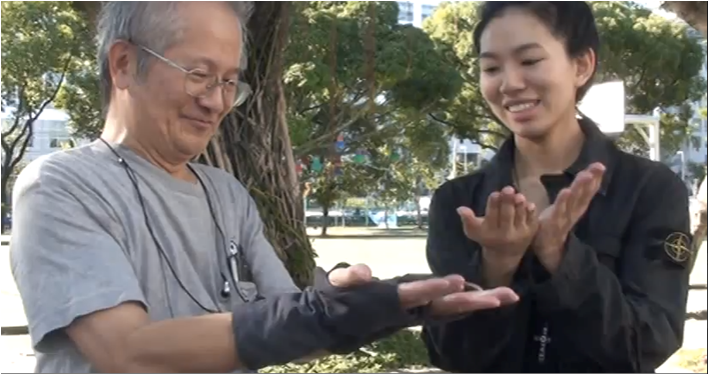
Fashion design master students Iris (黎彥伶) and Yuan (陳昱安) and postgraduate engineer Ted (沈續濤): designed, made and tested their fragrant electronic gloves for the elderly. The gloves gently encourage elderly, often wheel-bound, patients to remain active through the use of monitored hand exercises with feedback via coloured LED’s. In addition, the gloves provide warmth and, triggered by the heat, a pleasant fragrance. It is encouraging to see work exploring the needs of the elderly, which are not normally on the radar of electronic fashion.
The initial idea for the gloves came for Iris’ work in a care home where there is a recognised need to keep the elderly active, despite their lack of mobility. The incorporation of fragrance was also considered an important element as this can lift the mood of the wearer and the carer.
The following video gives a quick overview of the project; for those curious about details of the design and electronics continue on down.
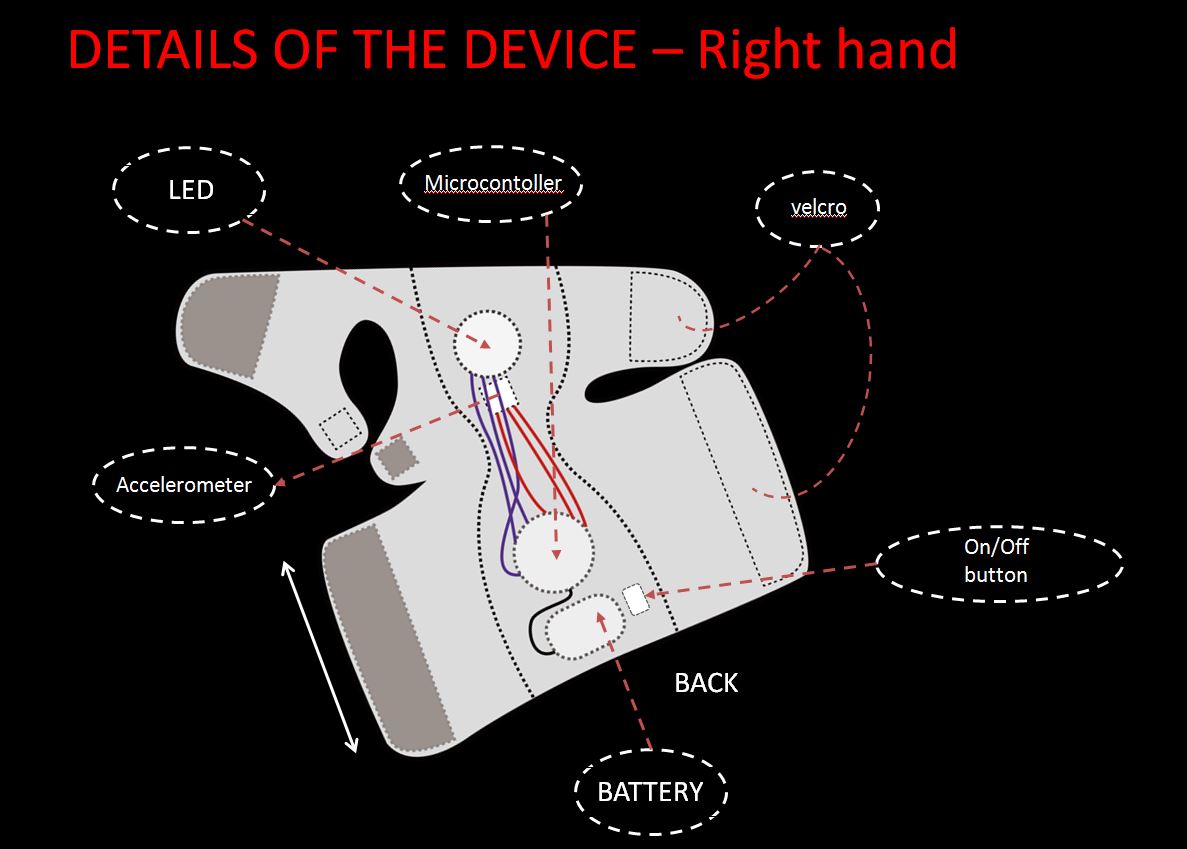
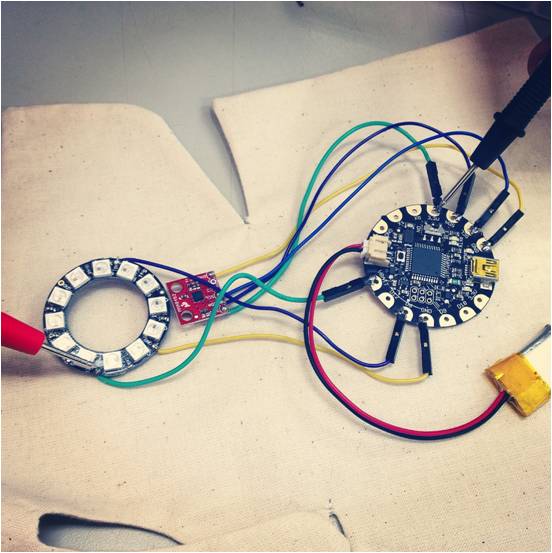
The right glove monitors the movement of the hand using an accelerometer coupled with an adafruit flora. A circle of 12 LED’s are used to provide feedback on the movement. As the wearer keeps moving their hand, more LED’s turn red, until after 12 mins of continuous use or longer for intermittent use, the complete set are lit up red.
The electronics integrated into the right glove. Flora microcontroller, Accelerometer, Neopixel LED’s and a 110 mAh LiPo battery.
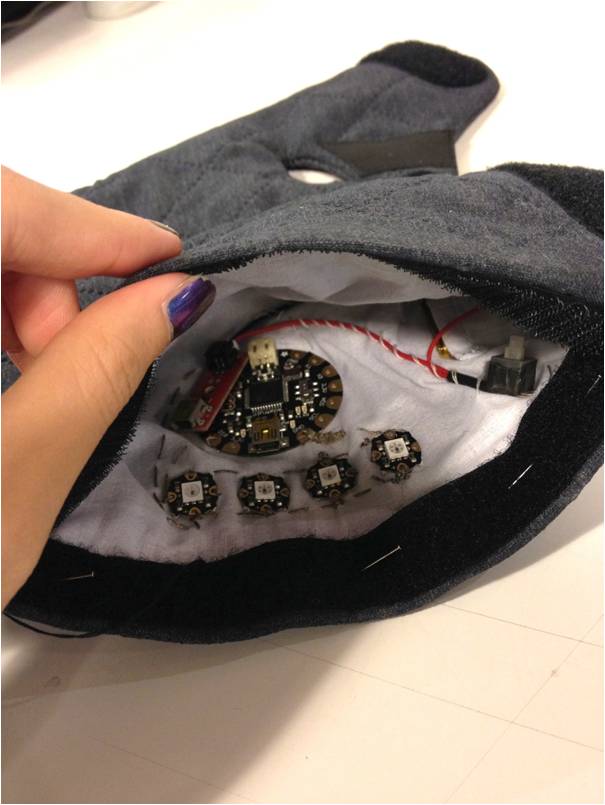
The left hand glove contains resistive wire which acts as a gentle heater, this is connected to the flora, 4 individual pixels and an 800 mAh battery. When the device is turned on the LED’s are white but after 12 minutes the LED’s turn red indicating that it is time to turn the heater of the glove off. The material of the glove is infused with a scent paste which is activated with heat and rubbing, giving out a pleasant smell.
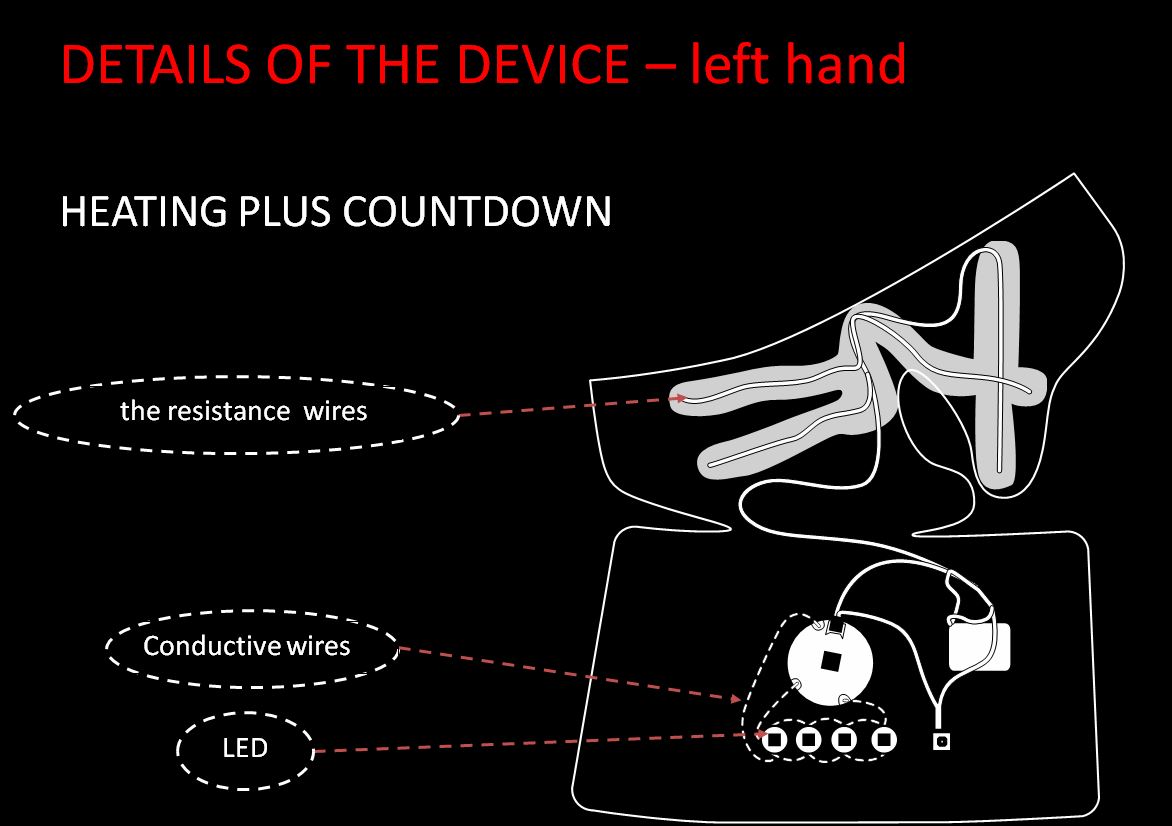
The interior of the left glove, showing the use of conductive thread. It took several attempts, involving re-sowing to get things working reliably. In hindsight wires and soldering, which were used on the right glove, would probably have been a better choice.
Some final debugging.
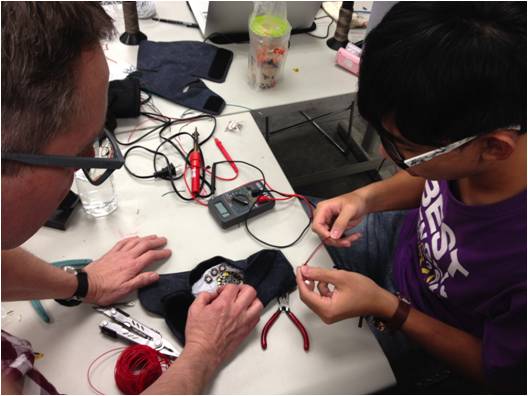
The work was part of an 8 day workshop on electronic clothes held at Shih Chien University (實踐大學), Taiwan. 14 fashion design students studying for a masters, together with 4 post grad engineers from neighboring National Taiwan University (國立臺灣大學) worked together to produce 7 working designs. The workshop was loosely held together by Lab-alpha7’s technologist, Paul Gough.